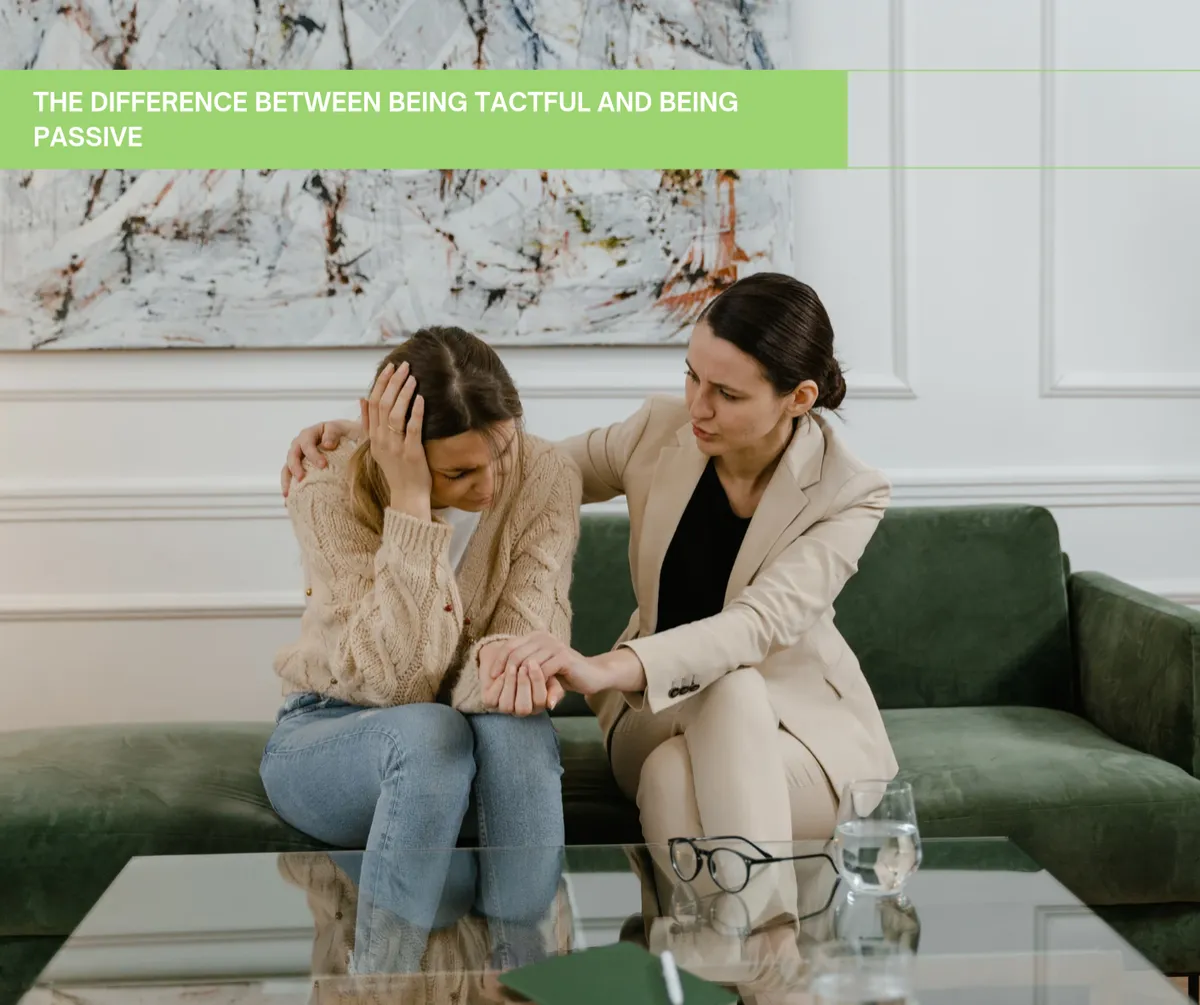
The Difference Between Being Tactful and Being Passive
Tact is often misunderstood.
Some people think being tactful means staying quiet.
They think it means softening the truth until nothing clear is left.
They think it means smiling through disrespect, avoiding conflict, or letting difficult people control the conversation.
That is not tact.
That is passivity.
Tact is not the absence of truth.
Tact is truth delivered with wisdom.
It allows you to speak clearly without creating unnecessary damage.
It helps you deal with difficult people without becoming difficult yourself.
Passivity Avoids the Issue
Passivity says:
“I will just let it go.”
“It is not worth saying anything.”
“I do not want to make things awkward.”
“Maybe they will figure it out.”
“I will just deal with it.”
Sometimes letting something go is wise.
Not every comment needs a response. Not every disagreement needs a meeting. Not every difficult person deserves access to your energy.
But when silence becomes a pattern, it creates problems.
The issue remains unaddressed.
Resentment grows.
The difficult behavior continues.
You begin to feel smaller in conversations where you need to show up with clarity.
Passivity may avoid discomfort in the moment, but it often creates more discomfort later.
Tact Addresses the Issue With Wisdom
Tact does not avoid the truth.
It chooses the right way to express it.
Tact asks:
What needs to be said?
When should it be said?
How can I say it clearly without attacking?
What outcome am I trying to create?
What tone will help this conversation move forward?
This is a stronger form of communication.
It is not driven by fear.
It is guided by purpose.
A tactful person does not need to humiliate, overpower, or win every exchange.
They speak in a way that gives clarity a chance.
Tact Still Has Strength
Some people avoid tact because they think it sounds weak.
But real tact has strength in it.
It may sound like:
“I want to be clear about this.”
“I see this differently.”
“That comment did not sit well with me.”
“I am open to discussing the issue, but not in that tone.”
“I do not agree, and I want to explain why.”
“That will not work for me.”
These statements are not aggressive.
They are also not passive.
They are clear.
That is the balance many people need to learn.
Difficult People Often Test Your Clarity
Difficult people may push back when you become clear.
They may interrupt.
They may minimize.
They may accuse you of being too sensitive.
They may try to make the conversation about your reaction instead of their behavior.
This is where tact and passivity separate.
Passivity backs down too quickly.
Tact stays grounded.
You do not need to become harsh.
You do not need to over-explain.
You can calmly repeat the point.
For example:
“I understand you see it differently. I am still asking that we speak respectfully.”
“I hear that you did not intend it that way. I am telling you how it landed.”
“We can discuss the issue, but I am not going to debate whether I am allowed to have a boundary.”
That is tact with backbone.
Harshness Is Not the Same as Honesty
Some people swing from passivity to harshness.
They hold things in for so long that when they finally speak, the message comes out with force.
Then they say, “I was just being honest.”
But honesty without wisdom can cause unnecessary harm.
The goal is not just to release frustration.
The goal is to communicate in a way that creates clarity.
You can be honest without being cruel.
You can be direct without being disrespectful.
You can name the issue without attacking the person’s character.
That is skilled communication.
A Practical Filter Before You Speak
Before responding to a difficult person, ask yourself:
Is this true?
Is this necessary?
Is this the right time?
Can I say this without attacking?
What outcome do I want after this conversation?
These questions help you avoid two extremes.
They keep you from staying silent when you need to speak.
They also keep you from speaking in a way that creates more damage than clarity.
This is the work of mature communication.
Final Thought
Being tactful does not mean being passive.
It means being clear enough to tell the truth and wise enough to say it with care.
You do not have to shrink yourself to keep the peace.
You also do not have to become harsh to be taken seriously.
There is a better way.
Calm.
Clear.
Respectful.
Firm.
That is the kind of communication difficult people often do not expect, but deeply need.
If you are ready to communicate with difficult people with more tact, strength, and clarity, begin with
How to Communicate with Difficult People with Tact and Skill.
Learn more here:
https://www.mindmastercourse.com/how-to-communicate-with-difficult-people-with-tact-and-skill
